2026-06-30
How to Choose Shampoo and Home Hair Care, From Scalp Type to Reading the Ingredient List

Shampoo's main job is washing off oil and buildup from the scalp, while treatment, masks, and oil work on the already damaged surface of the hair. So the basic order is to choose shampoo based on your scalp type and choose the rest of your home care based on hair condition. Knowing the criteria alone, rather than a specific product, already cuts down on most mistakes.
This guide covers why shampoo and treatment are fundamentally different products, how to identify your scalp type, the minimum to check on an ingredient list, what treatment, mask, and oil each actually do, how much to use and how to rinse, and one honest limit that home care alone cannot solve.
1. Shampoo is for the scalp, treatment is for the hair
Many people treat shampoo and treatment as if they serve the same purpose, but they play different roles. Shampoo's primary job is washing away oil, buildup, and leftover styling product from the scalp. Treatment, masks, and oil, on the other hand, work on the already damaged surface of the hair, the cuticle, smoothing and coating it. Without keeping these two goals separate, switching between random products tends to leave both the scalp and the hair less than satisfied.
One common misunderstanding is expecting damage to repair itself just by switching to a shampoo marketed for damaged hair. Shampoo is closer to a cleanser, and even with good ingredients it cannot restore the inside of the hair in such a short contact time. On the other hand, if your scalp is sensitive but you keep using a shampoo with heavy conditioning agents because it is good for hair, it can irritate the scalp or cause trouble. So the basic order is to choose shampoo by scalp condition and treatment by hair condition.

2. Start by identifying your scalp type
Scalp types are broadly grouped into oily, dry, sensitive, and combination. An oily scalp often looks shiny at the crown and gets you worried about odor even half a day after washing. A dry scalp feels tight right after washing and flakes often. A sensitive scalp has repeated trouble, stinging, or redness, and a combination scalp differs by area, oily at the crown but dry at the sides and back, for example. Deciding which of these four your scalp is closest to is the starting point for choosing home care.
If it is hard to judge on your own, one way is to press your crown with your fingertips about a day after washing. Feeling oily suggests you lean oily, feeling flaky or tight suggests you lean dry. That said, if redness, breakouts, or itching on the scalp keep repeating, that may not be a product problem at all but a skin condition, so if symptoms persist it is safer to see a dermatologist first.
3. The minimum to check on an ingredient list
You do not need to understand the entire ingredient list from start to finish. At minimum, check the first five or six ingredients listed, since those are present in the highest amounts and act as the main cleansing agents. A strong cleansing type near the front suits an oily scalp but may irritate a dry or sensitive one, while a mild type near the front may leave an oily scalp under cleaned. Just checking whether that front section matches your scalp type already avoids most major mistakes.
The next thing to check is whether fragrance, coloring agents, or silicone type ingredients are listed. None of these are automatically bad, but if your scalp is sensitive or prone to trouble, it is safer to first try a product with little or no fragrance and a relatively short ingredient list. When trying something new, rather than committing right away, use it once and check how your scalp reacts the next day before deciding whether to keep using it.

4. What treatment, mask, and oil each actually do
Treatment is rinsed out every time right after shampoo, lightly coating the surface of the hair to reduce tangling and smooth the texture in a short time. A mask is thicker than treatment and needs some time to sit, used about once or twice a week to bring deeper nourishment and moisture. Oil is not rinsed out, used only in small amounts on towel dried ends as a finishing step to coat the surface and add shine.
A common mistake is mixing all three with no particular order or timing. Applying oil close to the scalp can clog pores and lead to trouble, and using a mask every day can actually make hair heavier and flatter looking. The basic order is shampoo, then treatment or mask, and finally a small amount of oil on towel dried hair, and just keeping to this order changes the result.
5. Order, amount, and how to rinse
The basic method is to take about a coin sized amount of shampoo, lightly work up a lather in your palms first, then place it on the scalp. Massage the scalp gently with your fingertips, and let the lather flow naturally down to the ends, which is enough to clean them. Scrubbing with your nails can scratch the scalp, so pressing gently with the pads of your fingers is a better habit.
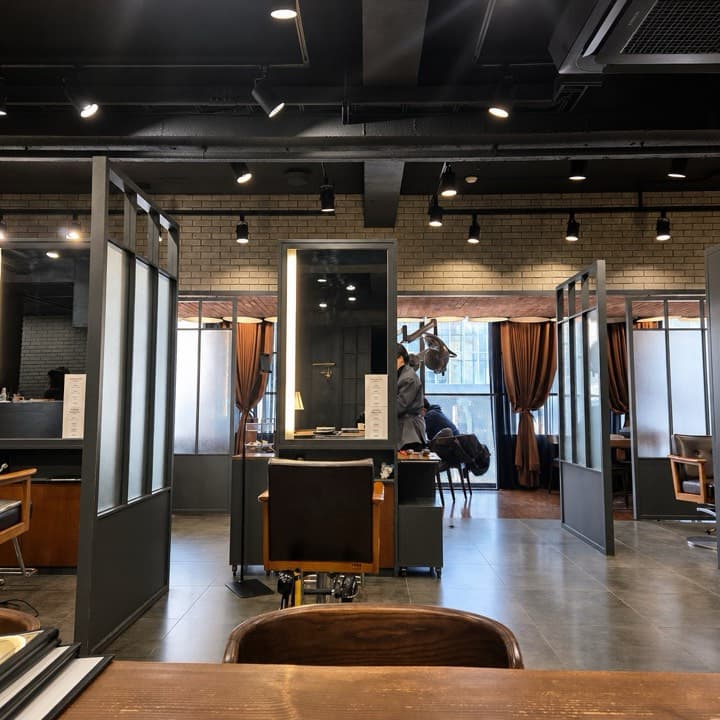
When rinsing, use lukewarm water and rinse the scalp thoroughly so no residue is left behind. Apply treatment or mask from the middle of the hair to the ends, avoiding the scalp, keep to the recommended sitting time, then finish with a rinse in water closer to cool to smooth the cuticle. If managing this yourself feels like a hassle, you can use the Relaxing Shampoo service at Juno Hair Seomyeon Bujeon, priced at 20,000 won based on the menu.
6. One honest limit, home care cannot replace a salon treatment
No matter how well chosen, home care cannot restore the internal structure of hair that is already damaged. Treatment, masks, and oil smooth the surface and reduce further damage, they are not a recovery treatment for hair that has already split or broken inside. If damage is already severe, considering a professional clinic treatment alongside home care is the realistic approach rather than expecting home care alone to solve it.
The same goes for the scalp. If trouble, itching, or redness keeps repeating, seeing a dermatologist first to check the cause matters more than trying one shampoo after another. Home care is, at most, for everyday maintenance and prevention, and approaching it with that in mind actually makes it easier to get the result you expect.
Starting scalp and hair care in Seomyeon, begin this way
Identifying your scalp type first, checking just the front section of the ingredient list, and using treatment, mask, and oil for their separate roles alone makes your home care direction far clearer. If it all feels overwhelming, having your scalp and hair condition checked first at a Seomyeon hair salon is also a good place to start.
How to get here and booking
Juno Hair Seomyeon Bujeon is at 3F Cheongyang Building, 40 Seomyeon-ro, Busanjin-gu, Busan. It is about a 5 minute walk from both Exit 7 and Exit 9 of Seomyeon Station, easy to reach by subway. Hours are open every day from 10:00 a.m. to 9:30 p.m. There are 6 designers, Won Suhyun, Jenny, Hyuk, Soyeon, Ina, and Yeji. For a scalp or home care consultation, call 051 809 9605.
If choosing shampoo and home care still feels confusing, start by identifying your scalp type and checking the front of the ingredient list. At Juno Hair Seomyeon Bujeon you can get a relaxing shampoo service and consult on a care direction that fits your scalp and hair at the same time.
Frequently asked questions
What is the difference between shampoo and treatment?
Shampoo's main job is washing off oil and buildup from the scalp, while treatment coats and smooths the already damaged surface of the hair. Since their goals differ, it helps to choose shampoo based on scalp condition and treatment based on hair condition.
How can I tell my scalp type?
If your crown looks oily even half a day after washing, that leans oily, if it feels tight and flaky right after washing, that leans dry, repeated irritation or stinging suggests sensitive, and different conditions in different areas suggest combination. If trouble or redness keeps repeating, seeing a dermatologist first is the safer route.
What should I look for on an ingredient list?
You do not need to read the whole list, the first five or six ingredients are the ones present in the highest amounts. Just checking whether that direction of cleansing power matches your scalp type is enough, and if your scalp is sensitive, testing a product with fewer ingredients and less fragrance first is a good idea.
Is there an order for treatment, mask, and oil?
The basic order is shampoo, then treatment or mask, and finally a small amount of oil on towel dried ends. A mask is best used about once or twice a week, and applying oil close to the scalp can clog pores, so it is better kept mainly to the ends.
What should I do if scalp trouble keeps happening?
Rather than trying different products one after another, if symptoms keep repeating, seeing a dermatologist first to check the cause comes first. It helps to keep in mind that home care is for everyday maintenance and prevention, not a way to treat a scalp condition.
Can good home care alone repair damaged hair?
No. Treatment, masks, and oil smooth the surface and reduce further damage, but they cannot undo hair that has already split or broken internally. If damage is severe, considering a professional clinic treatment alongside home care is the realistic approach.